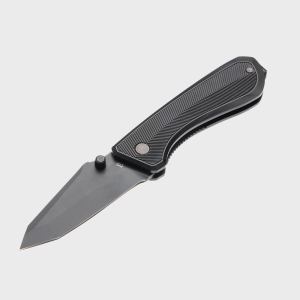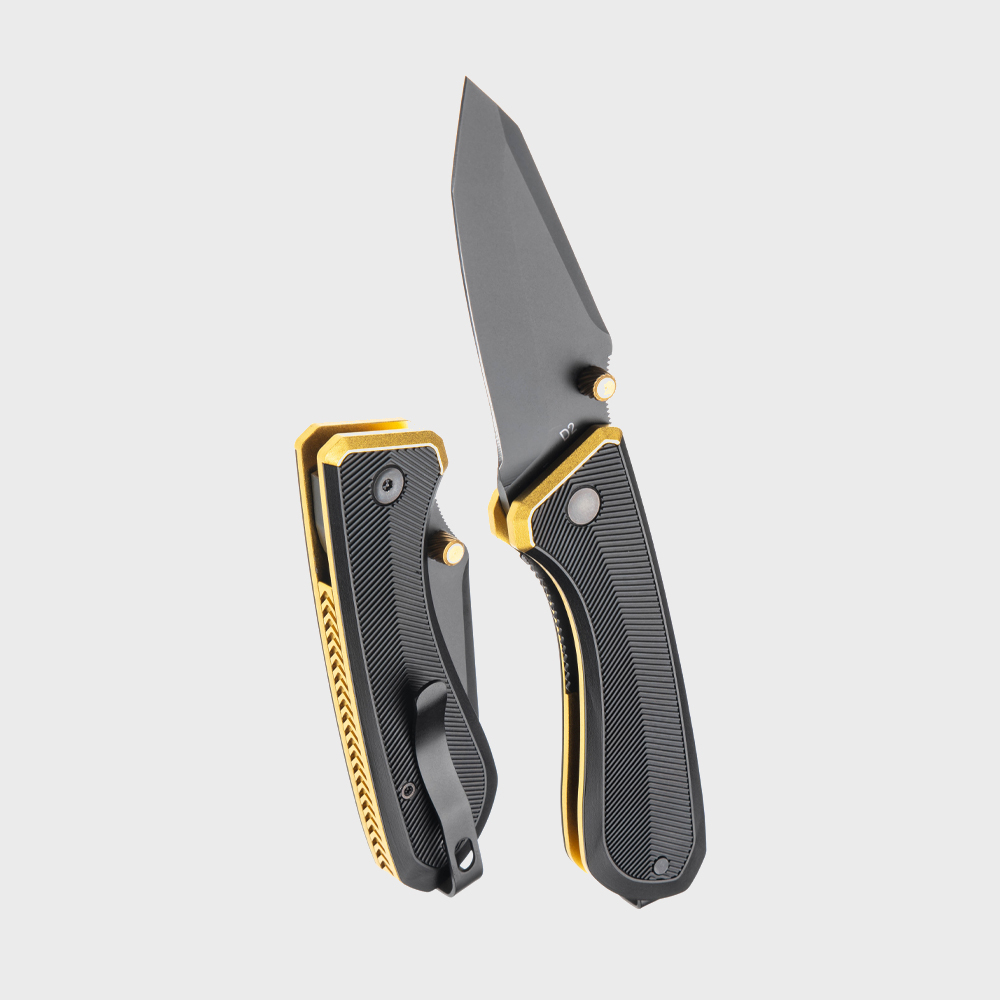
Edge geometry determines how a knife cuts, how long it stays sharp, and how well it resists damage. With compact EDC tools like the T.D.C. knife, the balance between slicing performance and durability is critical. An edge that’s too thin cuts effortlessly but risks chipping. An edge that’s too thick survives abuse but sacrifices efficiency.
Choosing the right edge profile ensures clean slicing while maintaining structural integrity—especially when the blade is used across a variety of everyday tasks.
What Edge Geometry Really Means
Edge geometry refers to the shape and thickness of the blade behind the cutting edge, as well as the angle of the sharpened edge itself. These two factors control how the blade moves through material and how much stress it can handle.
-
Thinner geometry = better slicing, less resistance
-
Thicker geometry = stronger edge, more durability
-
Edge angle determines sharpness vs strength balance
For EDC use, the goal is a geometry that slices cleanly without becoming fragile.
Common Edge Profiles Explained
Flat Grind
A flat grind tapers evenly from spine to edge, creating a balanced profile.
-
Strong balance between slicing and durability
-
Easy to maintain and sharpen
-
Ideal for general-purpose EDC tasks
Hollow Grind
A hollow grind creates a concave shape leading to a very thin edge.
-
Extremely sharp and efficient for slicing
-
Lower edge support increases chipping risk
-
Best for light-duty, precision cuts
Scandi Grind
A single wide bevel with no secondary edge angle.
-
Excellent control and bite in material
-
Strong edge for wood and controlled cuts
-
Less efficient for fine slicing tasks
Convex Grind
A curved edge profile that blends strength and slicing ability.
-
High durability with reduced chipping risk
-
Smooth cutting through dense materials
-
More difficult to sharpen consistently
Edge Angle: Where Performance Is Decided
The sharpening angle directly affects how the edge performs under stress.
-
15–17 degrees per side: Extremely sharp, best for slicing but more fragile
-
18–20 degrees per side: Balanced performance for EDC use
-
21+ degrees per side: Increased durability with reduced slicing efficiency
For most T.D.C. knife applications, a mid-range angle provides the best mix of performance and edge retention.
Why Edges Chip (and How to Avoid It)
Chipping occurs when the edge is too thin for the task or when it encounters excessive lateral force. Even high-quality steel can chip if geometry and use don’t align.
Common Causes
-
Edge angle too acute for the material being cut
-
Twisting or prying with the blade
-
Cutting hard or abrasive materials
-
Improper heat treatment or sharpening
How to Prevent Chipping
-
Match edge geometry to intended use
-
Avoid lateral stress during cuts
-
Maintain a consistent sharpening angle
-
Use a slightly more robust edge for mixed-use scenarios
Best Edge Geometry for Everyday Carry
EDC knives require versatility. They need to handle cardboard, plastic, packaging, and occasional tougher materials without constant maintenance.
-
Flat or lightly convex grinds offer the best balance
-
18–20 degree edge angles provide durability without sacrificing slicing
-
Slightly thicker edges reduce maintenance frequency
This combination ensures reliable performance without risking edge failure during everyday tasks.
Sharpening Considerations
Maintaining edge geometry is just as important as choosing it.
-
Use consistent angles during sharpening
-
Avoid over-thinning the edge over time
-
Strop regularly to maintain sharpness without removing excess material
Proper maintenance preserves both cutting performance and edge strength.
Did You Know?
A slightly thicker edge often stays sharp longer in real-world use because it resists micro-chipping that dulls ultra-thin edges quickly.
Conclusion
Choosing the right edge geometry comes down to balance. A profile that slices efficiently while maintaining enough strength to resist chipping delivers the best long-term performance. For precision-built everyday carry tools designed with durability and performance in mind, explore EDC gear options engineered for real-world use.
FAQs
What edge angle is best for everyday carry?
An angle between 18–20 degrees per side offers the best balance between sharpness and durability.
Why does my knife chip even though it’s sharp?
The edge may be too thin for the task or exposed to lateral force during cutting.
Is a hollow grind bad for EDC?
Not necessarily, but it’s better suited for light-duty tasks due to its thinner edge.
How can I make my edge last longer?
Use proper technique, avoid twisting cuts, and maintain the edge with regular stropping.
Does thicker always mean better?
No, thicker edges are more durable but reduce slicing efficiency. Balance is key.