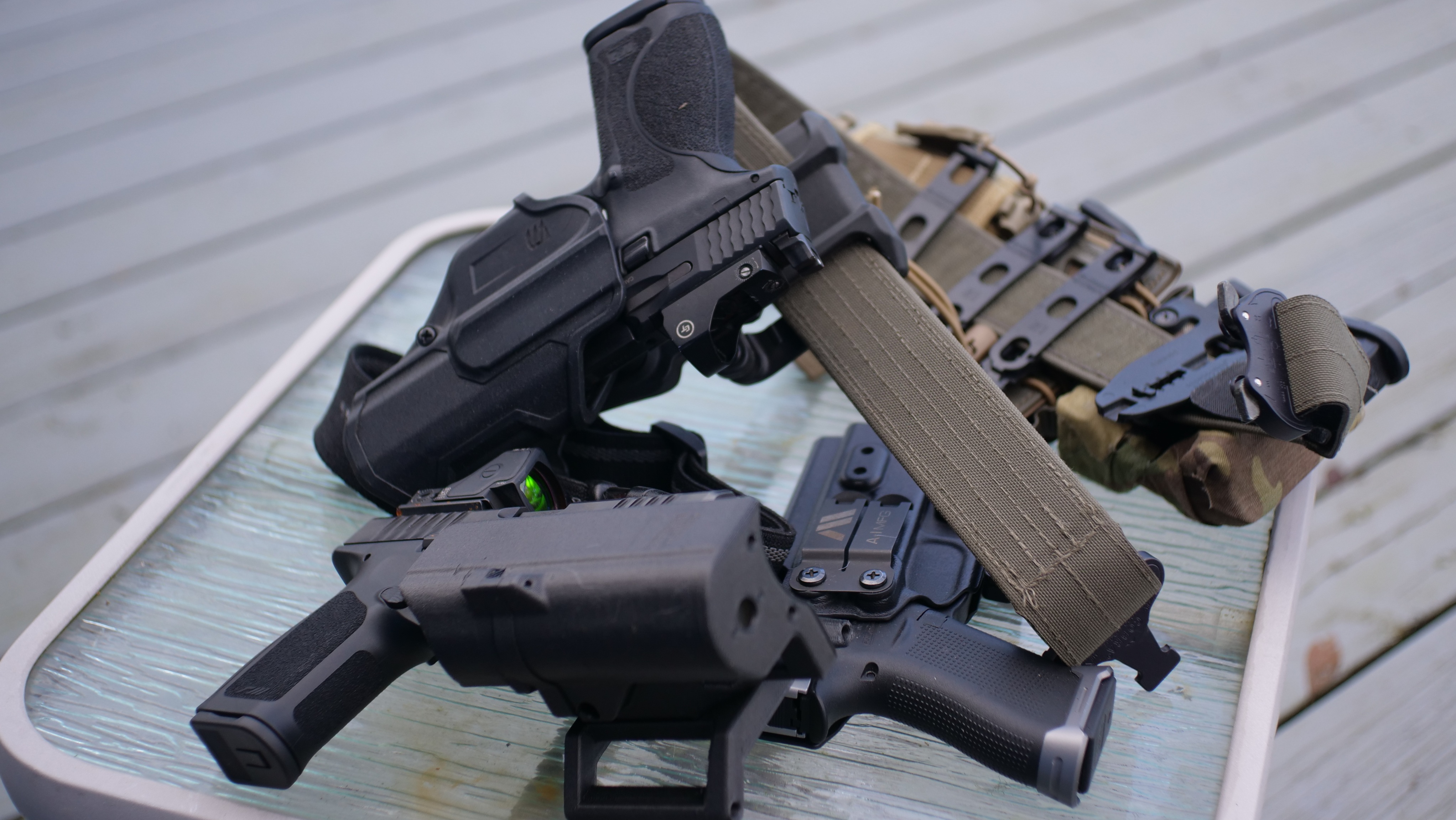
Choosing how to carry is as important as choosing the firearm. The right carry method blends concealment, accessibility, and comfort without sacrificing function or style. This guide breaks down the most common carry methods—inside-the-waistband (IWB), outside-the-waistband (OWB), the PHLster Enigma system, sling/backpack solutions, and pocket carry—so you can match method to body type, wardrobe, and purpose.
How we evaluate carry methods
We judge carry methods by four practical metrics: concealability, draw speed, all-day comfort, and real-world retention/security. Every method trades off between those metrics; the goal is to pick the best fit for your daily routine and clothing choices.
Inside-the-Waistband (IWB)
What it is: Holster sits inside the waistband—commonly used for deep concealment (AIWB, strong-side).
Pros
-
Excellent concealability under a t‑shirt or light jacket.
-
Close-to-body carry reduces printing and keeps pistol stable.
-
Fast access when positioned and practiced (AIWB is the quickest for many users).
Cons
-
Can be uncomfortable sitting if not fitted correctly or if holster ride height is wrong.
-
Requires a quality holster and proper belt to prevent sagging.
-
Appendix carry has higher risk of muzzle proximity to vital areas—training is essential.
Best for: Urban professionals, daily concealed carriers prioritizing low profile and quick access.
Outside-the-Waistband (OWB)
What it is: Holster mounted on the belt outside the pants—favored for comfort and speed.
Pros
-
Superior draw ergonomics and comfort for long wear.
-
Better suited for larger frames and heavier pistols (duty/range use).
-
Less sweat and grime transfer to the firearm versus IWB.
Cons
-
Harder to conceal without a jacket or cover garment.
-
Can snag or print under lighter clothing.
-
Retention options vary—choose Level 2/3 for high-movement roles.
Best for: Range days, duty use, or when wearing outer layers; carriers who prioritize comfort over deep concealment.
PHLster Enigma (Beltless / Deep-Concealment System)
What it is: A beltless, leg-supported system (faceplate + leg leash) that allows deep concealment without a traditional belt.
Pros
-
Exceptional deep concealment—no belt required, ideal for suits or slim silhouettes.
-
Distributes weight to the upper leg, reducing waistband pressure for some users.
-
Compatible with multiple holster types—flexible for different guns.
Cons
-
Slower reholstering compared with belt-mounted options and requires careful training.
-
Can be less stable during very dynamic movement unless properly adjusted.
-
Not ideal for high‑activity or tactical movement unless paired with retention strategies.
Best for: Deep concealment under formal attire or when a belt is impractical; users prioritizing minimal printing and discrete carry.
Sling / Backpack Carry (Off-body or On-body Sling)
What it is: Carrying the firearm in a secure compartment of a sling bag, crossbody pack, or dedicated chest rig.
Pros
-
Great for off-body concealment and blending EDC with everyday bags.
-
Can carry more gear (meds, tools) and keeps firearm accessible when worn properly.
-
Comfortable for long movements—weight is distributed across the torso.
Cons
-
Off-body carry introduces risk if the bag is unattended or grabbed—requires secured compartments.
-
Draw can be slower; requires practice to access smoothly while wearing the bag.
-
Bag removal or adjusting can compromise immediate access in some scenarios.
Best for: Urban commuters, travelers, and those who want integrated EDC storage with firearm access; ideal when belts/waistbands are unsuitable.
Pocket Carry
What it is: Small pistols or pocket holsters carried in pants or jacket pockets.
Pros
-
Extremely discreet and fast for pocket-optimized pistols.
-
No belt or special rig needed—low barrier to entry.
-
Very low printing with the right holster and clothing.
Cons
-
Limited to subcompact pistols—reduced capacity and ergonomics.
-
Must control loose items in the pocket to prevent malfunctions.
-
Draw mechanics require practice; reholstering into a pocket holster can be awkward and unsafe if not trained.
Best for: Minimalists, deep concealment users, or as a backup carry method.
Quick decision checklist
-
If concealment is #1 and you wear light layers → IWB or Enigma.
-
If speed & comfort for long wear are #1 → OWB.
-
If you blend gear with daily carry (laptop, med kit) → sling/backpack.
-
If minimalism and ultimate discreteness are #1 → pocket carry.
Did you know?
Small changes—ride height, cant, or a half-inch forward/back—can transform comfort and concealment. Most carry discomforts are fixable with holster angle or belt adjustments rather than changing the carry method altogether.
Conclusion: Match the method to your life
No single carry method is objectively best—context decides. Pick a method that fits your wardrobe, your daily activity level, and your training commitment. Train the draw, test concealment in the clothing you actually wear, and prioritize retention and safe reholstering practices. If you want gear that blends form and function, explore our curated EDC selections to pair the right holster and carry solution with your lifestyle.
Explore our Collections for holsters, packs, and carry solutions.
FAQs
1. Which carry method is easiest for beginners?
IWB is often recommended for beginners because it balances concealment with accessibility; start with a simple Kydex IWB and practice consistent draw routines.
2. Is the PHLster Enigma safe for daily use?
Yes—when properly adjusted and combined with quality holsters and training. The Enigma excels at deep concealment but demands deliberate reholstering discipline.
3. Can you carry in a sling/backpack while commuting?
Absolutely, but secure compartments and quick-access orientation are essential. Keep the bag on your person in crowded spaces to reduce loss or theft risk.
4. Does pocket carry limit my pistol choices?
Yes—pocket carry requires compact, pocket-optimized pistols and a proper pocket holster to ensure safe retention and draw mechanics.
5. How should I train for my chosen carry method?
Start with dry practice (unloaded) to master the draw and reholster mechanics, then progress to live-fire drills with a qualified instructor. Make concealment checks in real clothing part of your routine.