Iron sights are simple aiming assistants that have been around nearly as long as firearms have been. As reliable, affordable, and ubiquitous as iron sights are, red dots have sort of taken over the handgun market - especially when it comes to full-size and compact-sized guns. This is simply because red dots, at least as far as your eyes go, are a far better aiming solution. The truth is that by switching to a red dot, you’re actually simplifying the amount of work that both your eyes and your brain have to do to have a solid sight picture, instead of three things to keep track of (target, front sight, rear sight), your eyes now only have to overlay the dot over your target - two things. There are a whole lot of other massive benefits that red dots provide over traditional iron sights but today we’re here to talk about how you go from shooting with iron sights to shooting with a red dot.
Learning how to shoot a red dot is rather simple, but can be complicated by a number of things including bad habits learned from never having shot anything but red dots, as well as things that apply only when using iron sights. Essentially there is a short learning curve and even though it's easily overcome with some simple training, these hurdles oftentimes lead many to dismiss red dots altogether despite the massive advantages they offer shooters.
Go With What You Know - Co-Witness Irons
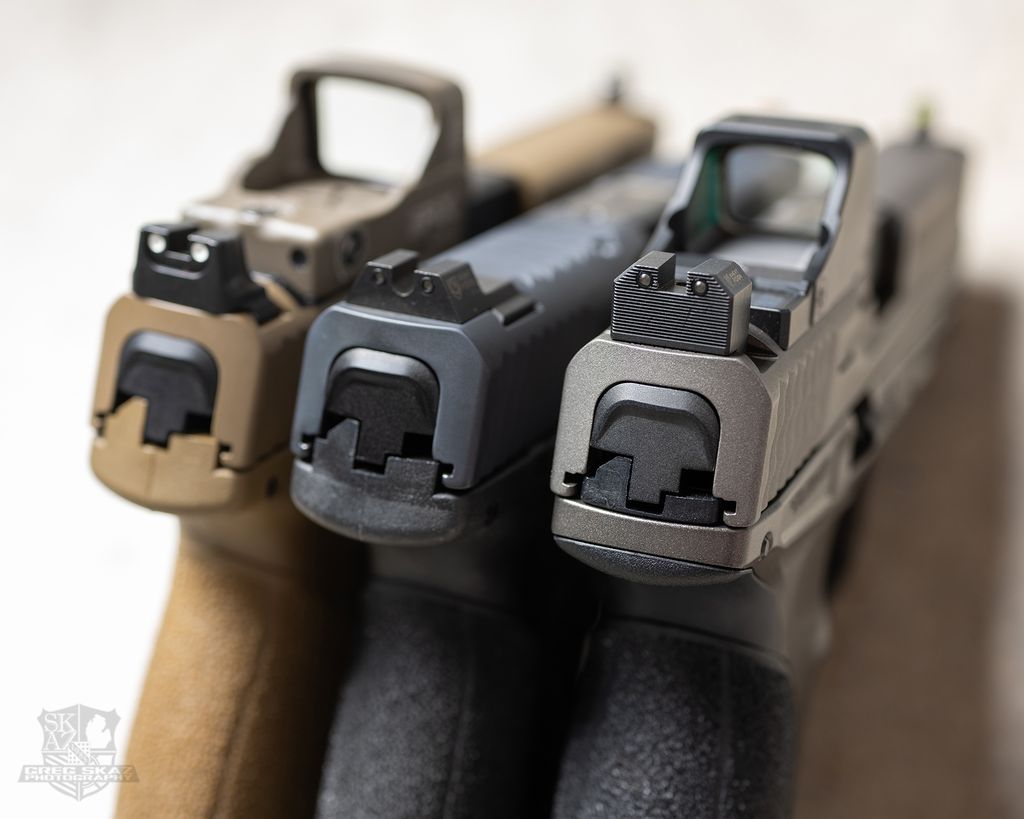
While this wasn’t an option in the early days of red dot sights, modern firearms, red dots, and iron sights are all more or less including at least the option to have a pair of backup iron sights that co-witness with your red dot in some way. The benefits are numerous here as first you’re giving yourself a bit of insurance against what is often the biggest criticism from people wary of carrying a red dot for concealed carry purposes - if the red dot happens to go down for any reason - the iron sights will still be there. Second, the co-witness irons will allow you to have additional cues in your peripheral vision for aligning the dot within the window.
While having co-witness irons isn’t strictly necessary, for a lot of shooters coming from iron sights only to red dots, this seems to be the easiest method of transitioning as it combines the familiar sight picture of iron sights and overlays it with the new red dot sight picture. Starting with a set of full co-witness height sights also isn’t necessary but can be helpful for those who are used to iron sights and want to try using them more often through the optic even when it is off. I usually like to keep a pretty low (lower 1/3rd) co-witness on my more compact guns as it gives me more open space around the dot to work with.
Foundation is Key: Start With Your Grip
If you don’t have a solid master grip on your handgun you’re going to have a hard time not just consistently finding your dot, but also keeping proper control of your handgun when shooting which will lead to an even harder time finding it for follow-up shots. If there’s one thing that I’ve heard most from the wide array of handgun instructors I’ve learned from it's that having a solid and repeatable master grip is the foundation of all success - and this is doubly true for shooting with red dots.
An improper or inconsistent grip on your handgun will usually lead to the dot being outside of your viewing range. Novices often try to mitigate this by moving their heads around to hunt for the dot when they should instead be focusing on presenting the firearm as consistently and solidly as possible. Working on having the perfect grip from a draw is key to fast and accurate shooting - and to making sure that dot is where you expect it to be when you go to present the firearm.
Practice and Don’t Give Up!
When I first started learning with red dots I thought I was doing quite well till I tried one out at one of my very first USPSA matches. I quickly learned that simply having the red dot didn’t automatically make you a better shooter but rather it was something to help you become a better shooter if you were willing to put in the work. If you’re not good with a red dot the simplest solution is simply practice. Through natural practice both at the range with live ammunition and at home with dry fire, you’ll eventually build the muscle memory and proficiency to present your dot in your natural shooting stance reliably. But like all things in the shooting world this is a perishable skill, make sure you get out there and put some hard work into running drills and being honest with yourself about your performance so you can learn!