The AR-15 is a popular and versatile rifle, and finding the right grip can make a world of difference in your shooting experience. There are probably hundreds if not thousands of options to choose from out there and if you’re looking for something other than your standard M4 style AR-15 grip, you probably want to make sense of everything before you go and buy something. Today we'll explore some key aspects to consider when choosing the perfect AR-15 grip that suits your style, needs, and preferences. Let’s take a deep dive into AR-15 grips!
We Have Come a Long Way (and so has the pistol grip)
The history of the AR-15 pistol grip is intrinsically linked to the evolution of the AR-15 platform itself. Originally designed by Eugene Stoner in the late 1950s, the early AR-15 rifles featured relatively basic grips with a straight backstrap. Over time, as the AR-15 gained popularity among civilians, the pistol grip design began to undergo changes and refinements. The introduction of the M16 rifle, which adopted the pistol grip design, further solidified its presence in the minds of all who saw it. For the time, this look was quite distinctive and even today gives the AR-15 its familiar silhouette.
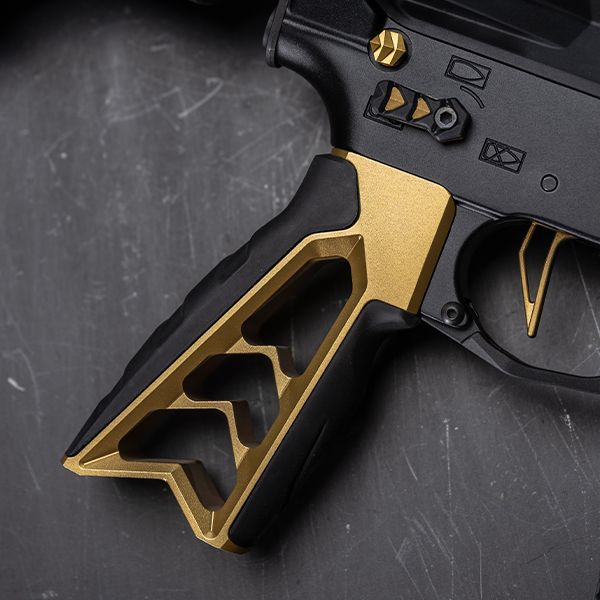
Shooters and manufacturers sought more ergonomic and user-friendly grips, resulting in the development of various styles and materials. Today, the AR-15 pistol grip is a crucial component in enhancing shooter comfort, control, and overall versatility, and it continues to be a focal point for customization and innovation within the AR-15 platform.
The attachment of an AR-15 pistol grip to the lower receiver is a straightforward and crucial step in assembling the rifle. With the exception of monolithic lowers like the KE Arms KP-15, the lower receiver of an AR-15 typically features a threaded hole designed to accommodate the grip's mounting bolt or screw. The grip is secured in place by threading a bolt or screw through the grip's base and into the lower receiver's hole and in most cases is responsible for holding the spring and detent used in combination with your rifle’s fire-selector. No matter what grip you choose to use, make sure you install it correctly.
Orientation: Righty, Lefty, or Both
One of the first things to think about is the orientation of your AR-15 grip. Some grips are specifically designed for left-handed or right-handed users. These grips can feel like a glove, fitting your hand perfectly. But, if you're not a stickler for left or right, there are ambidextrous grips like the Ergo 2 AR15/AR10 Ambidextrous Pistol Grip. These versatile grips work well no matter which hand you favor. It's all about what feels comfortable for you, so don't be shy about trying out different orientations to see what clicks.

Ambidextrous grips are often my go-to choice simply because I like to train with my non-dominant shooting side. For something like long-range precision shooting, a left/right-handed grip might make more sense because you’ll likely never have to shoot from your non-dominant side and need to maximize for accuracy and consistency instead.
Material Matters
The material of your AR-15 grip can affect your overall experience. There's a smorgasbord of choices, but the main contenders are polymer and rubber-coated grips. The good old A2 AR grip is a standard polymer grip that many folks like. But, if you want a bit more grip, rubber-coated grips can be found made from a good combination of materials. Some grips feature very stiff rubberized textures while others have a more supple texture. There are several combinations of materials out there so you’ll just have to find out what works best and feels the best for you..
Finger Grooves and Contours
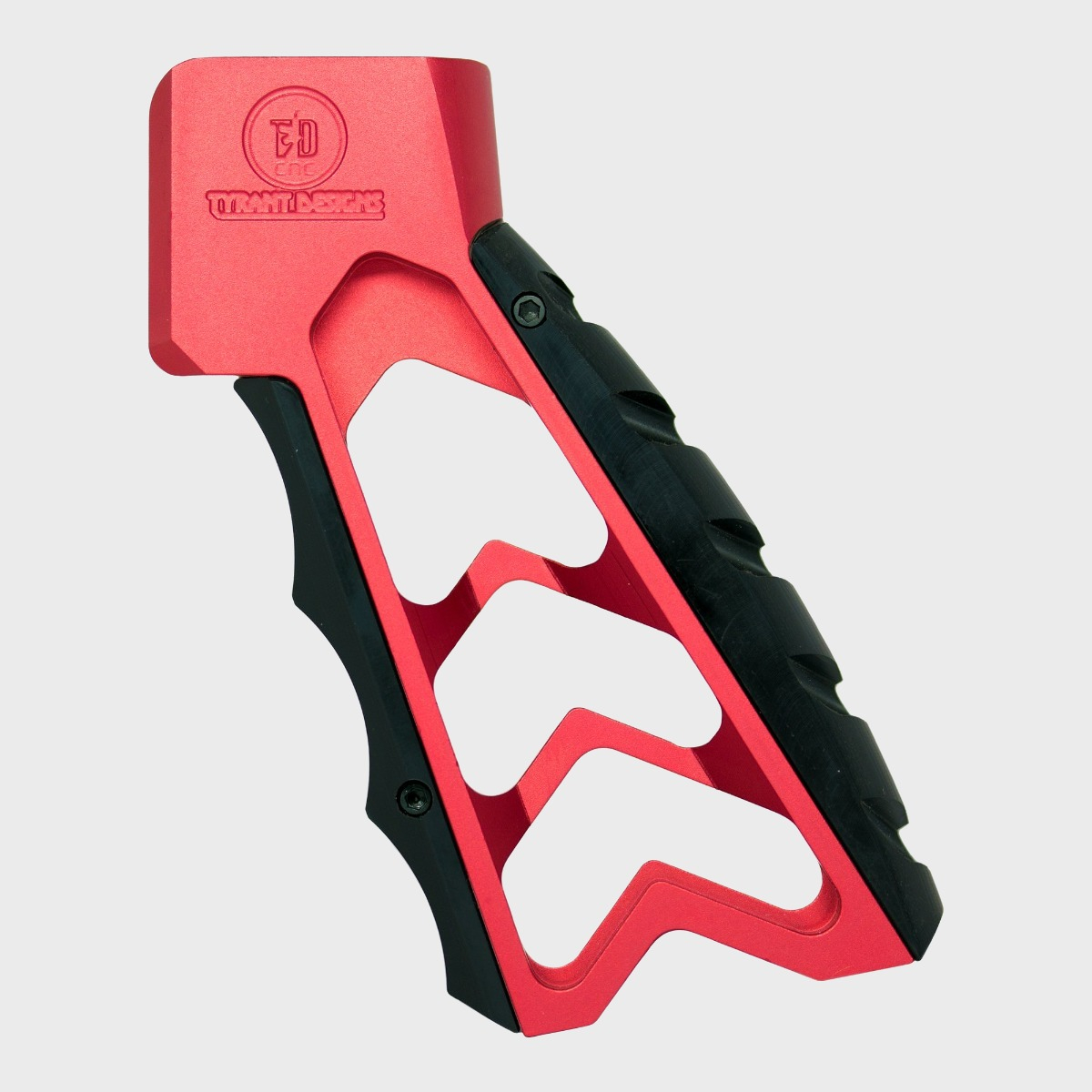
Comfort and grip go hand in hand, and finger grooves and contours can make a real difference. Grips with these features feel comfy and secure, wrapping around your hand for a solid hold. Plus, these grips are usually one-size-fits-all, making them work for any hand size. Check out the Tyrant CNC MOD V2 AR-15 grip – it's a prime example. It's like a glove for your hand, ensuring you keep a firm grip even during follow-up shots or when your hands are wet or sweaty.
Storage Solutions
Your AR-15 grip can be more than just a handle – it can be your secret stash spot. Some grips, like the Magpul MIAD 1.1 Grip Kit, offer extra storage space. Need to carry tools, batteries, or any other small essentials in the field? These grips can be a lifesaver. You've got customizable options to fit your needs. So, think about how you can make your grip work for you beyond just gripping your rifle.
Palm Shelf for Steady Shooting
For the long-range shooters out there, a palm shelf can be a game-changer. When you've got a bipod and a palm shelf, it helps maintain steady trigger control. It's like a built-in support system, and it can even dampen recoil. The Ergo Deluxe Tactical Pistol Grip with Palm Shelf is a great choice for precision shooting setups. With the added weight and support, you'll find it easier to keep your shots on target, whether you're hitting bullseyes or making those long-range shots count.
Final Thoughts
In the quest for the perfect AR-15 grip, don't be afraid to test out different options. I have an entire box full of unused pistol grips that I know I’ll find myself eventually using for a future build. What’s most important is that you find what feels right for your style, and shooting preferences and remember that the perfect grip is the one that complements your shooting needs feels good in your hand, and looks good. Whether you lean towards a specific orientation, prefer a particular material, want extra comfort with finger grooves, need some extra storage, or aim for better precision with a palm shelf, your AR-15 grip can be a personalized part of your shooting experience.