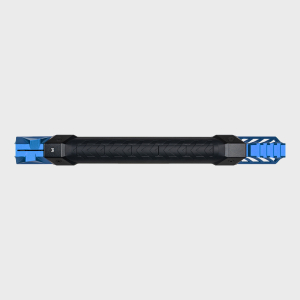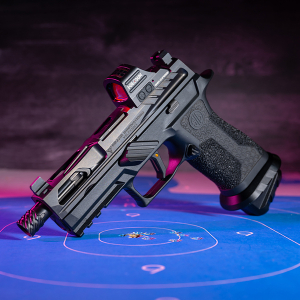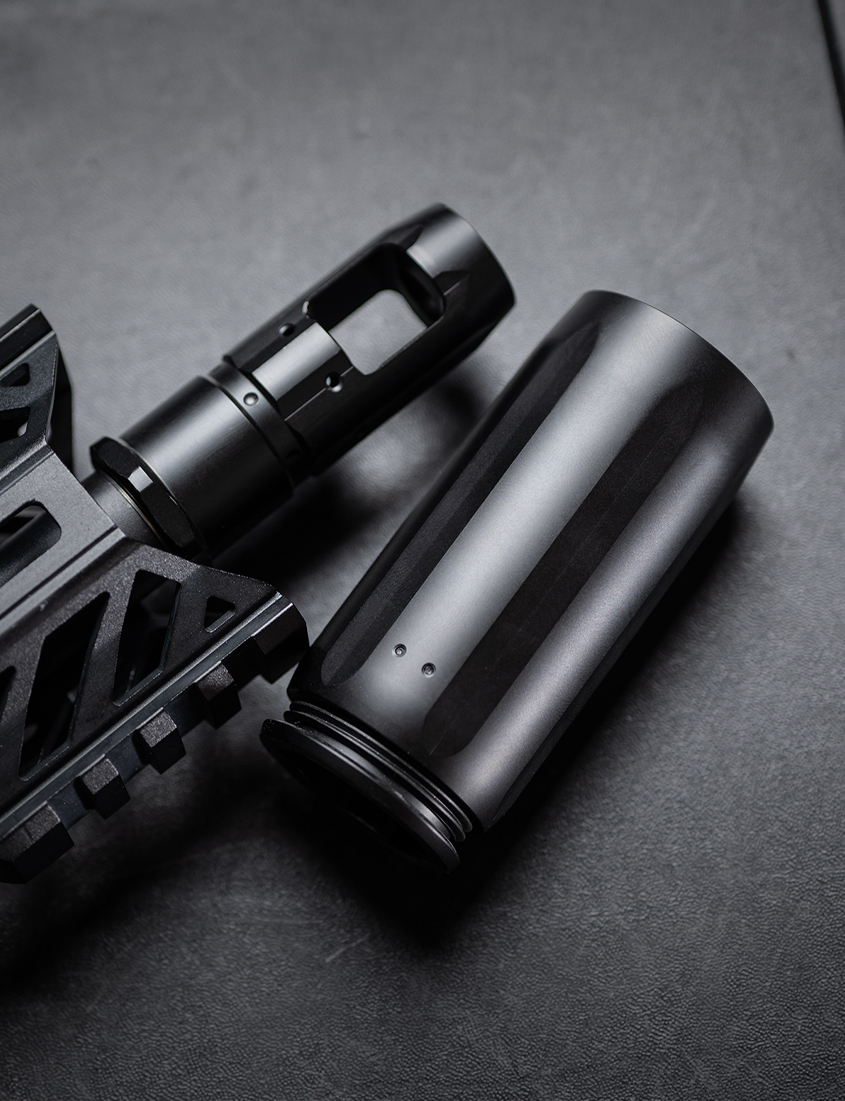
Muzzle Brake is a word that is quite common in the firearms world these days but one that is often misunderstood or misrepresented. This isn’t due to any conspiracy theory or marketing gimmick, but rather due to a misunderstanding of the specific terminology, and the goal of what a Muzzle Brake is meant to do versus other types of muzzle devices. Put simply, Muzzle Brakes are muzzle devices that are designed to counteract recoil, specifically the rearward travel caused by the detonation and resultant forces of the fired round. You’ll typically find muzzle brakes attached to competition carbines, magnum hunting rifles, and PRS competition rifles, but you’d very rarely see them on handguns where compensators tend to be more popular.
How They Work
Muzzle Brakes almost always mitigate recoil by directing the gasses from a fired round backward, while some muzzle brakes incorporate characteristics of compensators by directing some of the gasses sideways or vertically, Muzzle Brakes will always have a majority of the gasses being thrown backward in order to capitalize on the associated forces which cancel out recoil.
This typically means that vents will be oriented rearwards but what’s almost equally as important as the direction of the exhaust holes is the shape of the exhaust holes. The simplest form of muzzle brake is straight rearward vents. Some designs that do almost exactly this will be found on firearms like the Barret M82A1, often referred to as a “Tanker” brake on entirely different guns, collectively they are known as “impact type” brakes. While this type of brake is easy to manufacture and quite effective, modern manufacturing practices and research have allowed even more effective muzzle brakes to be created.
- Muzzle Brakes are often categorized in research spaces into three main categories:
- Impact Type: These brakes work by deflecting gases in a way that creates a counterforce to the recoil.
- Reaction Type: These brakes utilize the principle of Newton's third law of motion, where the force exerted by the escaping gas creates an opposite force, reducing recoil.
- Combined Type: Some brakes combine elements of both impact and reaction types for enhanced effectiveness.
In addition to these main types of muzzle brake categories, muzzle brakes can also be classified as: “Open” These brakes have fully open channels for gas expansion. Or “Semi-Open” characterized by partially restricting gas expansion.
When it comes to measuring efficiency you can cut it up in two different ways. One way is to measure the overall “Impulse Efficiency” which is the measurement of how effectively the brake reduces the impulse generated by the firearm during the firing sequence. Or by “Energy Efficiency” which measures the overall reduction in energy that is transmitted to the shooter. Both are equally valid ways to measure the efficiency of a muzzle brake but since most of us are using handheld weapons we’re mostly concerned with Energy efficiency - we’re trying to reduce how much of these forces we feel as the shooter. Impulse Efficiency is typically more important for reducing the wear and tear on machines that guns are attached to and so is more often found on large weapons like tanks and heavy machine guns.
What Modern “High Efficiency” Means
Although I’m still trying to wrap my head around the exact physics of what is happening here, I’ve gleaned a few things from the handful of research papers I’ve read on the subject combined with my background in Physics. From what I can tell the reason a strict straight rearward exhaust muzzle brake isn’t the most efficient has to do with the overall velocity of the exiting gas. Modern curved designs with small inlets allow the high-pressure gas to gracefully transition from forward to rearward motion with the narrow channels gradually expanding into larger exit ports that reduce the pressure to reduce the reward shock and noise for the shooter in addition to providing the highest velocity gas possible for recoil reduction.
We see this same concept in compensators and how they often get more efficient with hotter ammunition. Typically the more gas you can direct in the direction opposite of the recoil the more effective your muzzle brake will be. These high-efficiency muzzle brakes allow the high velocity gas from their parent firearms to remain at that high velocity therefore providing increased forward forces to counteract the rearward recoil forces.
High-efficiency muzzle brakes can typically reduce felt recoil (read energy efficient) by about 60% which is a drastic reduction in felt recoil which should lead to far less sight picture disturbance on your rifle or carbine. If you want further proof that muzzle brakes are not just pseudo-science meant to take your hard-earned money, just take a look at the US Military. Virtually any heavy machine gun, anti-material rifle, and piece of artillery has some sort of muzzle brake on it and while the overall concept has stayed roughly the same throughout the years, you’re gradually seeing new designs make their way into the arsenal - a testament to the effectiveness of one of the simplest firearm accessories out there.