Compensators reduce muzzle rise and speed follow-ups by redirecting gas, but the way they attach and are timed changes everything. This guide gives a clear, engineering-first comparison between uni-comps (integrated ports/cuts) and threaded add-on compensators. You’ll get installation checklists, expected POI behavior, blast and concussion tradeoffs, tuning advice, and a repeatable test plan so you can choose and tune the right solution for carry, range, or competition.
Core design differences
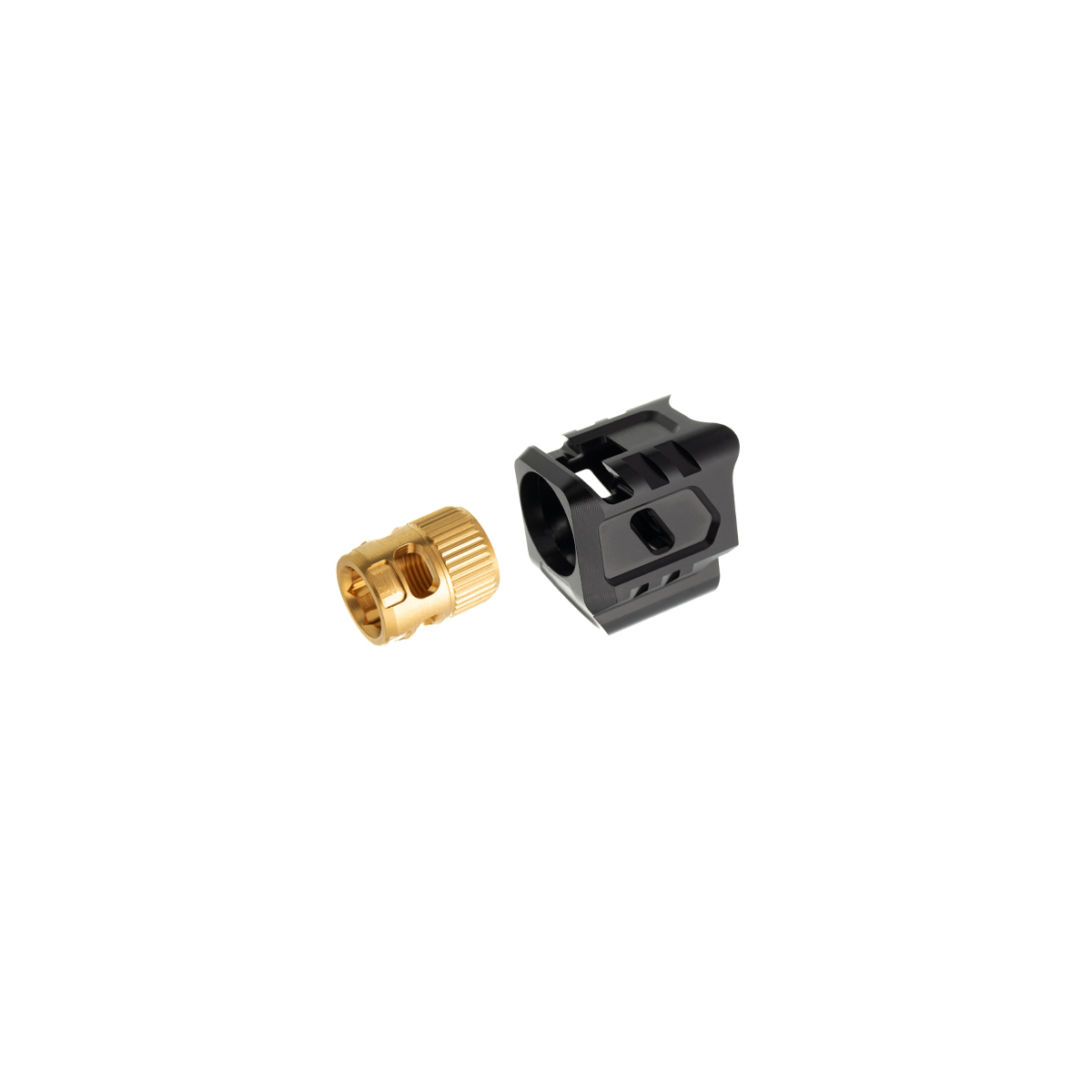
Uni-comps (integrated) are machined as part of the barrel/slide assembly or as a fixed port. Threaded compensators screw onto a threaded muzzle. That simple mechanical difference drives most of the functional tradeoffs:
-
Uni-Comp: Tight factory tolerances, built-as-a-system geometry, and minimal additional length. Predictable concentricity and often smaller, repeatable POI shifts.
-
Threaded comp: Modular and swappable; performance depends on mounting method (crush washer, shims, timing washers, or indexed mounts). Offers flexibility but requires meticulous setup to match integrated performance.
Installation & alignment checklist
Proper installation is non-negotiable. Concentricity and timing determine safety, POI, and baffle-strike risk.
-
Document baseline: Shoot 50 rounds with the factory setup to log POI, ejection pattern, and cycling behavior.
-
Inspect threads and muzzle: Ensure threads and crown are clean and undamaged before mounting a threaded comp.
-
Mount method: For threaded comps, use the vendor-recommended timing method (indexing shims, crush washer, or timing washer). For uni-comps, fit matched barrel/slide components per spec.
-
Check concentricity: Use a bore light or guide rod to verify the comp is centered. Small offsets (0.3-0.5 mm) matter.
-
Torque & re-check: Torque to spec, then dry-cycle and visually inspect for baffle contact before firing live rounds.
Point-of-impact (POI) behavior - what to expect
Any comp will change the muzzle impulse and typically shift POI. Expect:
-
Small, predictable POI shifts with integrated uni-comps because they are engineered into the barrel/slide geometry.
-
Variable POI shifts with threaded comps if timing or concentricity is off; when mounted correctly, they can produce comparable POI stability.
-
Vertical shifts are most common; lateral shifts often point to asymmetric mounting or misalignment.
Blast, concussion, and bystander effects
Redirecting gas increases side and rear concussion compared to a plain muzzle. Key points:
-
Threaded comps with long side ports can increase lateral blast toward bystanders or adjacent shooters at indoor ranges.
-
Uni-comps can be tuned into the firearm’s footprint to manage blast direction more predictably but still increase concussion versus a crowned muzzle.
-
Mitigation: choose low-blast designs for indoor use, always use hearing protection for everyone nearby, and prefer shorter comps for carry to reduce lateral concussion.
Tuning: springs, ammo, and timing
Comps change backpressure and slide dwell; tuning restores reliable timing:
-
Start with the manufacturer’s recommended recoil spring. If you see light ejection or stovepipes, go one step heavier and retest.
-
Test with your carry ammo first; different bullet weights and pressure curves affect timing and ejection patterns.
-
Change one variable at a time (spring, then ammo, then timing) and document results for repeatability.
Repeatable testing protocol
-
Baseline: 50 rounds factory configuration (document POI, ejection, malfunctions).
-
Install comp and verify concentricity and torque.
-
Shoot 50 rounds with the same ammo; measure POI delta at 25 yards and note ejection patterns.
-
If issues arise, adjust timing or increase recoil spring by one step; repeat 50-round blocks until reliable.
-
Record final configuration: comp model, timing method, spring weight, and ammo lot for future reference.
Holster, carry, and practical tradeoffs
Threaded comps add length and often require a dedicated holster. Uni-comps usually preserve a smaller overall footprint, aiding concealment. For daily carry, prefer low-profile options that balance muzzle-rise reduction with reholster safety and minimal printing.
Maintenance & inspection
-
Inspect threads and mating faces for peening or movement after the first 100 rounds and periodically thereafter.
-
Look for early baffle contact in threaded comps and finish wear at port edges on uni-comps; stop shooting if you see contact and investigate immediately.
-
Retorque and re-time after heavy use or if you notice POI drift or unusual wear patterns.
Did you know?
Concentricity errors as small as 0.3-0.5 mm can create asymmetric gas flow large enough to change POI and raise baffle-strike risk. That’s why precise timing and visual concentricity checks are essential for threaded compensators.
Conclusion - choose by system, then test
Uni-comps deliver tight, repeatable behavior because they’re engineered as part of the firearm system; threaded comps offer flexibility but demand meticulous mounting, timing, and testing to match that predictability. Pick the approach that fits your mission - compact, carry-friendly uni-comps for daily use, or threaded comps for modular flexibility when you accept the extra setup burden. Always validate changes with a methodical test protocol and tune springs and ammo for reliable function.
Find matched compensators and compatible parts in our handgun compensators collection: handgun compensators & upgrades.
FAQs
1. Will any compensator change my point of impact?
Yes. Redirecting gas alters muzzle impulse and commonly shifts POI. Proper timing and concentric mounting minimize magnitude and variability.
2. Which produces less blast for range neighbors?
Low-blast designs - whether threaded or uni - are better for confined ranges. Uni-comps can be engineered to manage blast direction predictably, but port orientation and overall design matter more than attachment method.
3. How do I quickly check concentricity?
Use a bore light and look for even illumination around the comp, or pass a guide rod to visually assess centering. For precision, have a gunsmith or use a dial indicator fixture.
4. My threaded comp caused vertical stringing - what should I try first?
Re-check timing and concentricity. If those are correct, try increasing recoil spring weight by one step and re-test in 50-round blocks before changing anything else.
5. Are threaded comps legal everywhere?
Many jurisdictions regulate threaded barrels and muzzle devices. Verify local and state laws before purchasing or modifying a firearm.