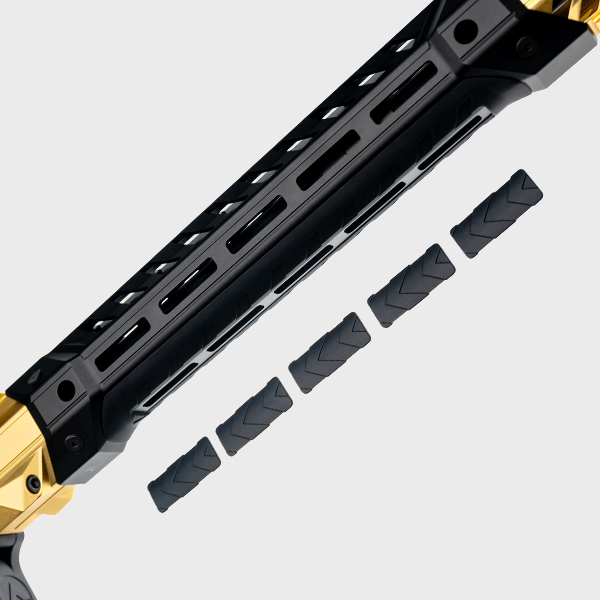
Long free-float rails provide extended grip options, improved accessory spacing, and multiple QD mounting points. They also introduce a common problem: sling mounts that interfere with the support hand. Poor placement can create pressure points, snag gloves, or disrupt grip consistency during recoil management.
Proper QD sling mount placement on long rails requires balancing rifle control, sling geometry, and hand positioning. The goal is clean sling routing without compromising support-hand ergonomics.
Why Long Rails Change Sling Dynamics
Longer rails shift the support hand farther forward. This alters sling angle and tension under load.
-
Forward grip positions increase sling torque
-
Extended rails amplify small alignment mistakes
-
More QD sockets increase placement temptation
What worked on a shorter rail often causes interference on extended systems.
Start With Support-Hand Position
Sling mount placement should follow grip placement—not the other way around.
Identify Natural Grip Zone
Grip the rifle in your preferred shooting stance and mark where your support hand naturally settles. This zone must remain clear of QD hardware.
Preserve Thumb Path
If using a thumb-over-bore grip, avoid placing QD mounts near the 11 o’clock or 1 o’clock positions where the thumb tracks forward.
Best QD Positions on Long Rails
Rearward Rail Mounting
Mounting the QD socket slightly rearward of the support-hand position keeps the sling anchored without crowding the grip area.
3 or 9 O’Clock Alignment
Side-mounted QD points at the 3 or 9 o’clock position maintain clean sling travel and reduce top-rail interference.
Avoid 6 O’Clock on Extended Rails
Bottom-mounted QD points near the front increase snag risk and create unwanted sling torque during transitions.
Maintaining Rifle Balance
Sling placement affects perceived weight distribution.
-
Front mounts placed too far forward create muzzle dip
-
Rear-biased mounting improves balance and control
-
Symmetrical alignment prevents lateral pull
Balance improves when sling tension aligns with the rifle’s center of mass.
Preventing Snagging During Movement
Snagging usually occurs during transitions, not static shooting.
-
Keep sling path clear of light mounts and pressure switches
-
Avoid sharp rail edges near QD sockets
-
Test reloads and barricade movement after installation
Function testing reveals interference before it becomes a problem under stress.
Did You Know?
Sling-induced torque increases as rail length increases, even when using the same attachment points.
Conclusion
Effective QD sling mount placement on long rails starts with preserving support-hand ergonomics and aligning sling tension with rifle balance. Rearward positioning, side alignment, and controlled geometry eliminate snagging while maintaining control. When mounted intentionally, extended rails offer versatility without compromising handling. To explore rail systems engineered for modular mounting and clean sling integration, browse AR-15 handguards and rails designed for modern configurations.
FAQs
Where should a QD mount be placed on a long rail?
Slightly behind the natural support-hand position and aligned at the 3 or 9 o’clock position.
Why does my sling pull the rifle off balance?
The front QD mount is likely placed too far forward or misaligned.
Is a bottom-mounted QD point recommended?
Not on extended rails, as it increases snagging and torque.
Should sling placement change with different grips?
Yes. Placement should match the shooter’s natural support-hand position.
Is testing necessary after installing a QD mount?
Always. Movement and reload drills confirm proper placement.