Adding a micro-comp to a pistol can dramatically change how the gun shoots—but it also changes how your sights behave, especially in low-light conditions. Comp height, slide timing, and optic placement all influence whether your iron sights remain usable as a backup or reference. This guide explains how to select and configure sights that properly co-witness with micro-comps, ensuring reliable low-light performance without compromising your setup.
Why Micro-Comps Change Sight Requirements
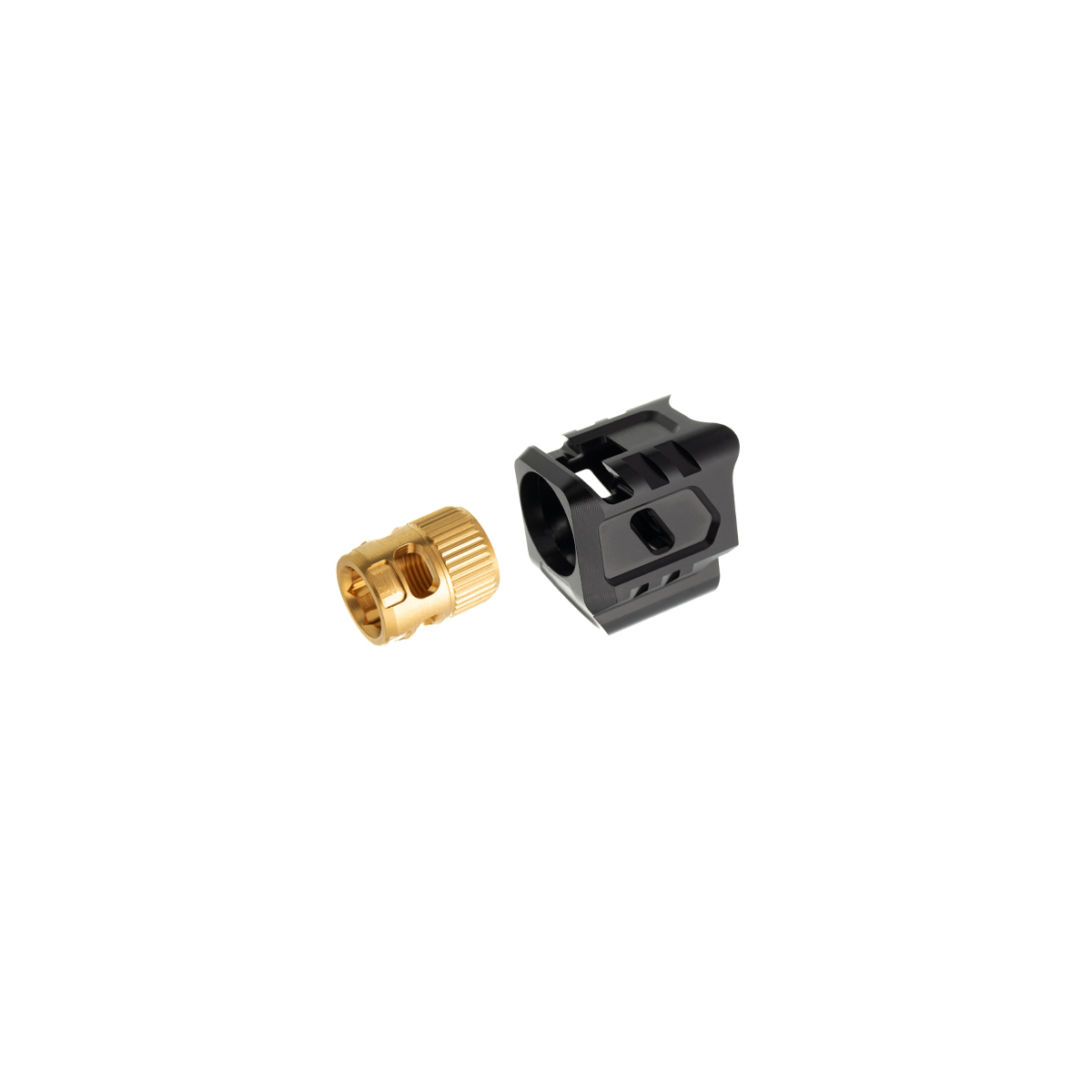
Micro-comps redirect gas upward to reduce muzzle rise, but they also alter the visual plane at the front of the slide. Depending on design, a comp can partially obscure standard-height front sights or change how the slide tracks during recoil. In low light—when visual cues matter most—poor sight selection can slow target acquisition or eliminate your backup sight picture entirely.
Understanding Co-Witness Levels with Micro-Comps
Lower Co-Witness
A lower co-witness setup keeps irons just visible at the bottom of the optic window. With micro-comps, this usually requires a slightly taller front sight to remain visible above the comp body while keeping the rear sight unobtrusive.
Absolute Co-Witness
Absolute co-witness places irons directly in the center of the optic window. This can work with micro-comps, but only if the front sight height clears the comp without overcorrecting and blocking the optic.
Choosing the Right Front Sight Height
Front sight height is the most critical variable when running a micro-comp. Too short, and the comp masks the sight. Too tall, and the sight picture becomes cluttered.
-
Micro-comp pistols often require a front sight taller than standard but shorter than suppressor height
-
Clean sight edges help maintain visibility when gas and carbon build up
-
Consistent blade width prevents distortion in the optic window
Rear Sight Considerations for Low Light
Rear sights should support fast alignment without drawing attention away from the dot. With micro-comps, rear sight placement remains unchanged, but sight design matters.
-
Minimal rear notch glare improves night visibility
-
Plain or subdued rear dots reduce visual noise
-
Square shoulders help track alignment if the optic fails
Low-Light Performance: What Actually Matters
In reduced lighting, your eye prioritizes contrast and alignment over fine detail. A properly matched sight set should allow immediate reference without forcing you to hunt for the front sight around the comp.
Testing should be done in real low-light conditions—not just indoors under artificial lighting—to confirm that the sight picture remains usable with the comp installed.
Did you know?
Many shooters mistake gas splash or carbon buildup for poor sight choice—when in reality, incorrect front sight height is the root cause of low-light sighting issues on comped pistols.
Conclusion: Build the Sight System Around the Comp
Micro-comps improve shootability, but only when the sight system is designed to work with them. Proper co-witness height, balanced sight geometry, and clean visual design ensure that irons remain a reliable reference in low-light scenarios. Whether you’re running an optic or irons-only, the right sight setup keeps your pistol usable when lighting conditions are less than ideal.
For precision-machined sights designed to integrate with modern pistol setups, explore handgun sight upgrades.
FAQs
1. Do micro-comps always require taller sights?
Not always, but many setups benefit from slightly increased front sight height to maintain visibility.
2. Are suppressor-height sights too tall for micro-comps?
Often yes. They can clutter the optic window unless specifically tuned for the comp’s profile.
3. Should I change rear sights when adding a micro-comp?
Usually no, but selecting a low-glare, simple rear sight can improve clarity.
4. Can night sights work with micro-comps?
Yes, as long as the front sight height clears the comp and maintains proper alignment.
5. How do I test co-witness in low light?
Test outdoors or in dim environments with your carry ammo and comp installed to confirm visibility.