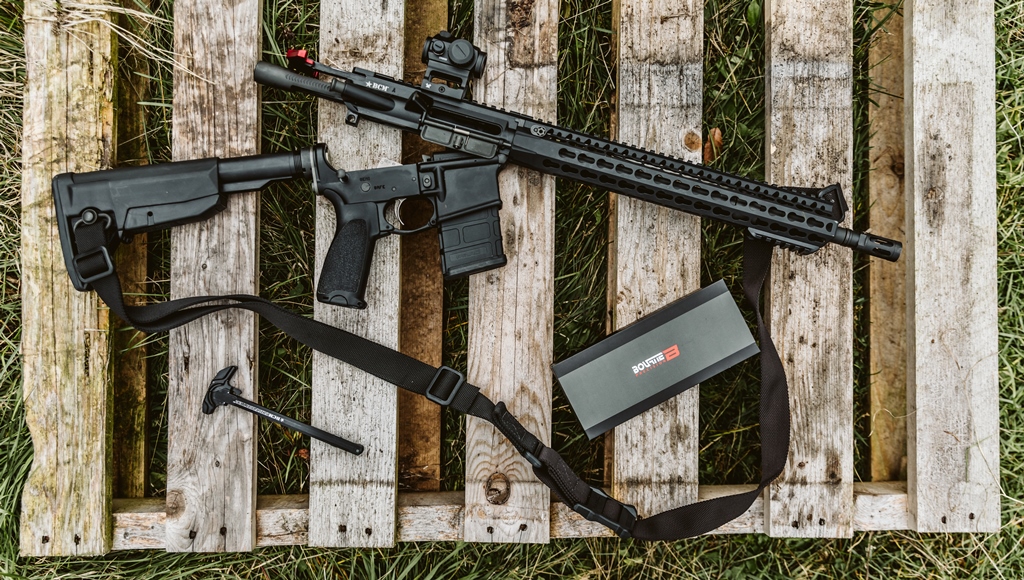
One of the most eternally popular weapon systems in the United States – and across the world – is the AR-15 patterned rifle. They come in all kinds of shapes, sizes, colors, cartridges, and features. Whatever one you own though is likely your favorite. To keep it in tip-top shape though you will inevitably need to do some routine maintenance on it. What does that entail though? What does that look like? What tools do you need and how often should you do it?... We’ll answer all those questions here today.
First off, there are certain things to look for that might clue you in on it being time for some routine maintenance. If you happen to experience any issues at the gun range (nothing catastrophic), then you may want to look at a deep-dive cleaning of your rifle. This could be something as simple as a Failure-to-Feed (FTF), Failure-to-Fire (FTF) or detonating a round, and/or your rifle cycling slowly or inconsistently. Too often shooters think their rifle is “broken” or it must be sent back to the manufacturer. Sometimes that can be the case and that is the appropriate course of action, but other times your rifle simply needs a good cleaning and sprucing up to start functioning perfectly again. So, if you have no clue how many rounds have been through your rifle since its last cleaning you can simply listen to your rifle and watch for problematic symptoms.
Some of the areas of your AR-15 that may need cleaning are the Bolt-Carrier Group (BCG), chamber, bore/barrel, and the inside of the lower receiver. Your BCG is responsible for pushing rounds into the chambering and ripping them back out, cycling back and forth smoothly. If it becomes aggressively dirty that can slow down the cyclical rate of the rifle; thus, causing light primer hits, FTE, FTF, and other issues. So, a clean BCG is important. Ensuring there is no debris, particulates, or obstructions in your chamber is also important because this could cause a Failure-to-Feed or a crushed cartridge. Both scenarios are not the end of the world, but they are not good either. You NEVER want any obstructions in your bore or barrel because that could cause a catastrophic malfunction. A barrel could blow up and debris or components could hit the shooter. That would be incredibly bad. Finally – it seems impossible – but sometimes debris, sticks, and grime can accrue in the bottom of your lower receiver near the trigger group. This can result in a gritty trigger, a trigger that fails to function, or other weird anomalies.
So, what do you need to attack these areas of concern?... A simple gun cleaning oil, toothbrush, rags, Q- tips, and a cleaning rod can do wonders. Yes, there are a ton of specialized tools out on the market that are fantastic, but if you want to go economical, that will absolutely suffice. You simply want to clean the aforementioned areas, so nothing is impeding the cycling and function of the rifle. If you do that your AR-15 will remain the envy of all your friends. All things to consider! Until next time, continually check out our blog, join our newsletter, and watch the website for new and exciting updates! As always, let us know all your thoughts in the comments below. We love it when you participate in our articles and keep the conversation going!