Everyday carry components - magwells, basepads, triggers, grip modules, and EDC tools - face constant wear. They rub against clothing, absorb impacts, deal with sweat and moisture, and must remain reliable in high-stress defensive situations. Choosing the right material isn’t just a technical decision - it determines how long your gear lasts, how it feels, and how confidently it performs under real EDC conditions. Below is a practical breakdown of 6061 aluminum, 7075 aluminum, and steel, focused on what you’ll actually experience day-to-day.
Understanding 6061 Aluminum for Everyday Carry
6061 is one of the most widely used aluminum alloys in EDC parts. It offers a strong balance of durability, machinability, and weight savings.
Best Use Cases for 6061
-
Low-impact components like backplates, magazine extensions, and certain grip enhancements.
-
Ultralight carry setups where comfort and minimal printing matter.
-
Design-forward parts where anodizing and surface finish quality are important.
Advantages
-
Lightweight and comfortable for all-day carry.
-
Cost-efficient while still offering real durability.
-
Easy machining allows clean lines and detailed aesthetics.
-
Accepts anodizing extremely well.
Limitations
-
Softer than 7075 or steel - sharp edges can wear faster.
-
Less ideal for parts regularly slammed, dropped, or impacted.
-
Threads can fatigue faster under repeated torque if not reinforced.
7075 Aluminum: Stronger, Stiffer, Better for Hard Use
7075 is the high-strength aluminum alloy used when weight savings and structural integrity must coexist. It’s significantly stronger than 6061 while staying just as lightweight.
Where 7075 Excels
-
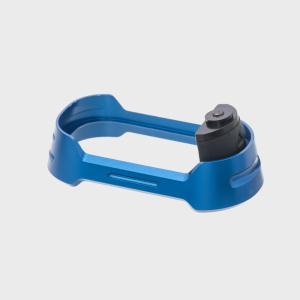
Magwells and basepads that take repeated impacts during reloads.
-
Parts used on training-heavy or competition-leaning pistols.
-
Components requiring long-term dimensional consistency.
Advantages
-
Much harder than 6061 with similar weight.
-
Better resistance to deformation and heavy use.
-
Ideal for parts requiring precise edges and funnels.
Limitations
-
More expensive than 6061.
-
Harder to machine - manufacturing must be precise.
-
Still not as wear-resistant as steel under sliding contact.
Steel: Maximum Strength and Wear Resistance
Steel remains the durability king. When components face extreme wear or must maintain shape under heavy force, steel is unmatched - but carries a weight penalty.
Best Applications for Steel
-
Slide-mounted parts or components with high friction.
-
Guns used primarily for duty, winter carry, or high-round-count range sessions.
-
Interfaces that demand absolute rigidity and longevity.
Advantages
-
Exceptional toughness and wear resistance.
-
Stays dimensionally stable under extreme use.
-
Highly robust threads and locking surfaces.
Tradeoffs
-
Heavier - more noticeable in concealed carry.
-
Can corrode if not properly coated or cleaned.
-
Extra weight may affect draw speed and comfort.
How to Choose the Right Material for Your EDC Setup
The best choice depends on how you actually carry and use your firearm.
For Lightweight, Low-Print Everyday Carry
-
6061 or 7075 aluminum keeps weight down and minimizes printing.
-
Ideal for magwells, basepads, and trigger components.
For High-Round-Count or Training-Focused Pistols
-
7075 aluminum offers superior longevity and resistance to abuse.
-
Excellent for repeated reload drills and competition-level tempo.
For Maximum Durability Above All Else
-
Steel is unmatched for wear-heavy interfaces and long-term use.
-
Best suited for full-size guns or duty configurations.
Did you know?
The biggest performance differences often come from geometry and surface finishing - not just the material. A precisely machined 6061 part with a proper anodized finish can outperform a poorly designed 7075 or steel component in real-world EDC conditions.
Choosing the Right Alloy for Your Next Upgrade
Each material offers its own advantages: 6061 for versatile lightweight carry, 7075 for strength under stress, and steel for unmatched durability. The best approach is choosing the alloy that complements your real-world carry habits and performance requirements. For design-forward EDC parts crafted from high-grade materials, check out our curated lineup at everyday carry components.
FAQs
1. Is 7075 always better than 6061 for carry parts?
Not always. 7075 is stronger, but 6061 often provides more than enough durability for compact carry builds and is more cost-efficient.
2. When should steel be used instead of aluminum?
Use steel for high-wear, high-stress components or range-heavy guns where weight is less of a concern.
3. Will aluminum parts show wear quickly?
Quality aluminum parts - especially those properly anodized - hold up extremely well under daily carry conditions.
4. Does material choice affect corrosion resistance?
Yes. Aluminum (6061/7075) naturally resists corrosion. Steel requires coatings or routine cleaning.
5. Can I mix 6061, 7075, and steel parts on one gun?
Absolutely. Many well-tuned EDC builds use aluminum for weight savings and steel where maximum durability is needed.